



Gable Vents & Louvers
LOUVERS & GABLE VENTS
Architectural vent shapes and trim for functional airflow and finished exterior detail.
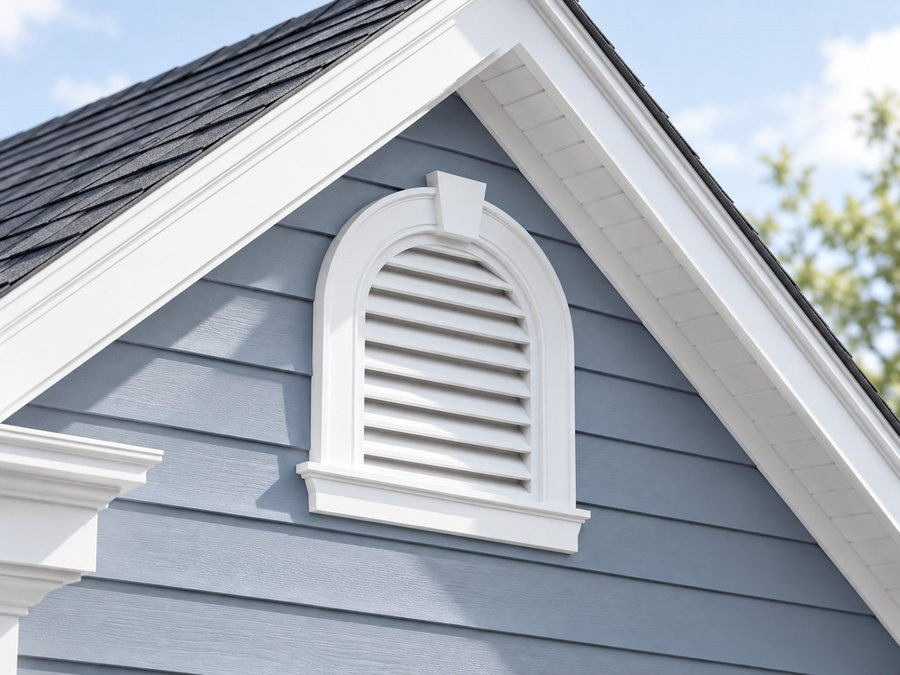
Gable Vents and Louvers in Polyurethane
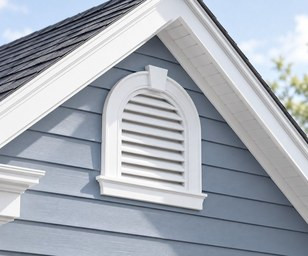
A gable vent, also called a gable end vent or louver vent, sits in the wall at the peak of a gable, under the roof line. Spectis makes almost every shape in two versions. An open louver vent has open slats that let air move, for a gable opening that is part of how the attic breathes. A closed louver keeps the same face but is solid and does not pass air, so it suits a decorative gable vent on a wall that is already sealed.
Shapes include triangle, rectangle, square, round, half round, arch top, octagon and elongated octagon, horizontal and vertical oval, round and oval with keystones, diamond, eyebrow, peaked top and arabesque, plus a louvered attic access door. Sizes run from 8 in to 137 in wide and from 5 5/16 in to 90 in tall. All Spectis gable vents and louvers are made of polyurethane, and they arrive primed white, ready to paint.
Compare the overall width and height with your wall, and for a triangle compare its slope with your roof. For an open vent, confirm the net free vent area your attic needs with your builder or designer. Install with ADH100 polyurethane adhesive on every bedding and butt joint, along with the recommended fasteners. Shop open louvers or closed louvers, see our triangle gable vents, or read how to choose and size a gable vent.
Gable Vent Types by Shape
The shape of a gable vent should follow the lines of the house. A triangle gable vent echoes the roof itself and sits tight under the peak; it is the most common choice on steep, narrow gables. Round gable vents and octagon gable vents read as a single strong accent and suit Colonial, Cape Cod and farmhouse elevations. Rectangular and square louvers fit Craftsman and modern homes, and tall, narrow rectangles work well in pairs. Half round and arch top gable vents soften a wide gable and pair nicely with arched windows below. Ovals, ovals and rounds with keystones, diamonds, eyebrows, peaked tops and arabesque designs add period detail to Victorian, Georgian and Mediterranean homes.
Open vs. Closed Louvers
Almost every Spectis shape comes in two versions. Open louver gable vents have open slats so air can pass, and several models include a screened back. Use them where the gable opening is part of the attic ventilation plan. Closed louvers have the same face but a solid back, so they are purely decorative: use them on a sealed wall, a conditioned attic, a dormer face or anywhere you want the look of a vent without airflow. Our guide to open vs. closed gable louvers goes into more detail.
How to Size a Gable Vent
Gable vents look best when they fill roughly a quarter to a third of the gable's width and leave even space above and to each side. A vent that is too small looks like an afterthought from the street; one that is too large crowds the rake trim. Measure the gable from the street-side face, then:
- Width: for a gable 20 ft wide, a vent around 24 to 36 in wide usually reads well; very wide gables can take 48 in and up.
- Height: keep at least 6 to 12 in of wall between the top of the vent and the underside of the rake trim.
- Triangle vents: match the vent's slope to your roof pitch so the top edges run parallel to the rake.
- Replacement: measure the existing rough opening and compare it with the overall size and the CAD drawing on each product page.
- Ventilation: for an open louver, confirm the net free vent area your attic needs with your builder or designer before ordering.
Spectis gable vents run from 8 in to 137 in wide and up to 90 in tall, so most gables can be fitted from stock. Our step-by-step gable vent sizing guide includes worked examples.
Why Polyurethane Gable Vents?
All Spectis gable vents and louvers are made of high-density polyurethane. Unlike wood, polyurethane will not rot, split or warp when it is installed and painted properly, and it is far lighter than wood or fiberglass, which makes overhead work at the peak of a gable safer and easier. Unlike thin vinyl vents, a polyurethane louver has crisp, deep profiles and a solid feel. Every vent ships primed white and ready to paint with a quality exterior latex, so it can match the trim or contrast with the siding.
Installing Gable Vents and Louvers
Check the opening and backing against the CAD drawing, bed every joint and bearing surface in ADH100 polyurethane adhesive, and fasten with the recommended stainless or galvanized screws or nails into solid framing. Caulk the perimeter, fill fastener holes and paint. Flat trim rings and surrounds, such as our gable vent flat trim, can frame a vent and cover an irregular opening. The full gable louver installation guide walks through each step.
Finish the Gable
Gable vents look complete with matching gable trim. Consider gable brackets in the peak, sunbursts over windows and roof finials. Not sure what goes where? See which Spectis piece goes where.
Gable Vent FAQs
What is a gable vent?
A gable vent is a louvered vent or decorative louver set in the wall at the end of a gable roof, under the rake. It is not a ridge vent or a soffit vent. Open versions let air pass; closed versions only give the look of a vent.
How do gable vents work? Are they intake or exhaust?
An open gable vent has open slats (some models also have a screened back), so air can move between the attic and the outdoors. Whether it acts mostly as intake or exhaust depends on wind and on the rest of the attic's ventilation. A closed louver does not pass air at all. Confirm your ventilation design with your builder or designer.
Do I need soffit vents if I have gable vents?
That depends on the attic's overall ventilation design and local code, not on the gable vent alone. Confirm the required net free vent area and ventilation design with your project designer before ordering an open louver.
What size gable vent do I need?
As a rule of thumb, choose a vent about a quarter to a third of the gable's width, with 6 to 12 in of wall above it. For triangle vents, match the slope to your roof pitch. See our gable vent sizing guide.
Should I choose an open or closed louver?
Choose open where the gable is part of the attic ventilation, and closed where the wall should only look like it has a vent. See open vs. closed gable louvers.
What are Spectis gable vents made of?
All Spectis gable vents and louvers are high-density polyurethane. They will not rot, split or warp when installed and painted properly, and they are much lighter than wood.
Do gable vents come painted?
They ship primed white and ready to paint. Finish with a quality exterior latex paint after installation.
How do I install or replace a gable vent?
Measure the existing opening and compare it with the overall size and the CAD drawing. Bed every bearing surface and joint in ADH100 polyurethane adhesive and fasten into solid framing with the recommended fasteners, then caulk, fill and paint. See the installation guide.
Can I get a gable vent in a custom size or shape?
Spectis stocks more than 300 sizes across triangle, round, rectangle, octagon, oval, arch, half round, diamond and other shapes, from 8 in to 137 in wide. Contact us if you need something outside that range.
- Product
- Qty in Cart
- Quantity
- Price
- Subtotal
-
 Now: $206.00Was: $246.00
 -
 Now: $233.00Was: $280.00
 -
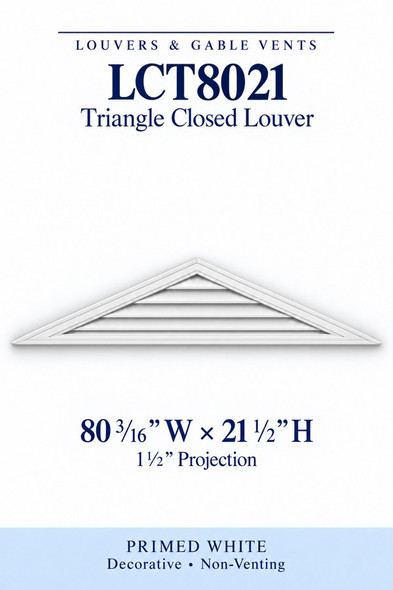 Now: $237.00Was: $283.00
 -
 Now: $273.00Was: $324.00
 -
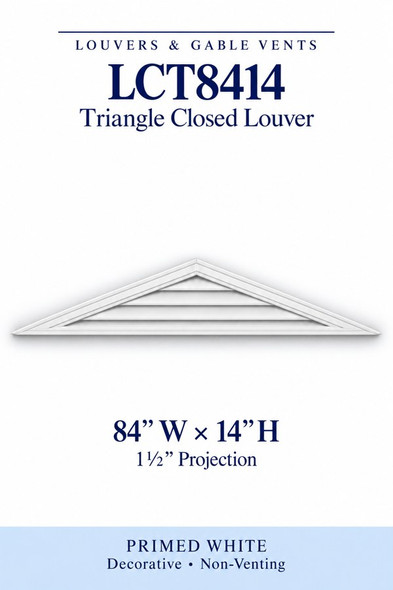 Now: $150.00Was: $179.00
 -
 Now: $172.00Was: $206.00
 -
 Now: $252.00Was: $301.00
 -
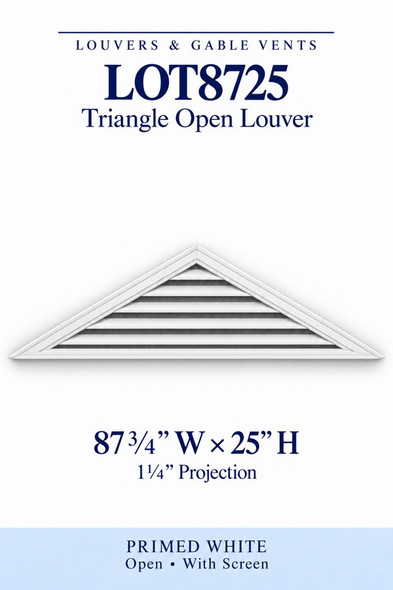 Now: $327.00Was: $393.00
 -
 Now: $330.00Was: $396.00
 -
 Now: $379.00Was: $454.00
 -
 Now: $355.00Was: $425.00
 -
 Now: $405.00Was: $486.00
 -
 Now: $59.00Was: $70.00
 -
 Now: $65.00Was: $80.00
 -
 Now: $99.00Was: $119.00
 -
 Now: $114.00Was: $137.00
 -
 Now: $104.00Was: $125.00
 -
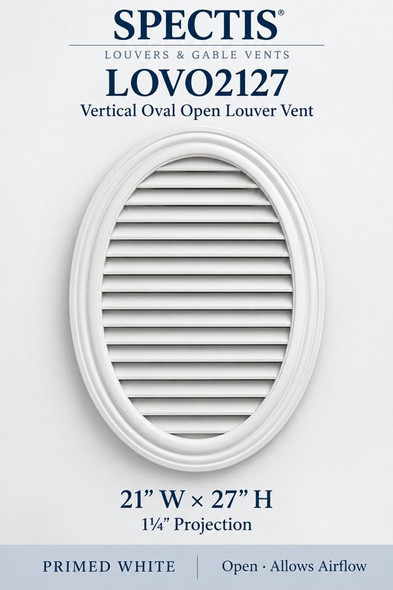 Now: $120.00Was: $141.00
 -
 Now: $134.00Was: $162.00
 -
 Now: $155.00Was: $186.00
 -
 Now: $176.00Was: $212.00
 -
 Now: $203.00Was: $243.00
 -
 Now: $176.00Was: $212.00
 -
 Now: $203.00Was: $243.00
 -

Vertical Oval with Keystones Gable Vent 21 3/8″ W × 27 7/8″ H Closed Louver (LCVOK2127)
Now: $137.00Was: $165.00Now: $137.00Was: $165.00 -

Vertical Oval with Keystones Gable Vent 21 3/8″ W × 27 7/8″ H Open Louver (LOVOK2127)
Now: $158.00Was: $191.00Now: $158.00Was: $191.00 -

Vertical Oval with Keystones Gable Vent 22 3/8″ W × 34 7/8″ H Closed Louver (LCVOK2234)
Now: $182.00Was: $216.00Now: $182.00Was: $216.00 -
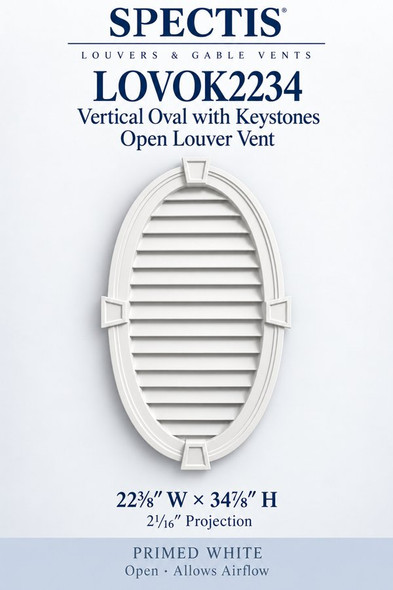
Vertical Oval with Keystones Gable Vent 22 3/8″ W × 34 7/8″ H Open Louver (LOVOK2234)
Now: $207.00Was: $248.00Now: $207.00Was: $248.00 -

Vertical Oval with Keystones Gable Vent 25″ W × 31″ H Closed Louver (LCVOK2430)
Now: $174.00Was: $208.00Now: $174.00Was: $208.00 -

Vertical Oval with Keystones Gable Vent 25″ W × 31″ H Open Louver (LOVOK2430)
Now: $200.00Was: $239.00Now: $200.00Was: $239.00 -

Vertical Oval with Keystones Gable Vent 29″ W × 36″ H Closed Louver (LCVOK2835)
Now: $237.00Was: $283.00Now: $237.00Was: $283.00 -

Vertical Oval with Keystones Gable Vent 29″ W × 36″ H Open Louver (LOVOK2835)
Now: $269.00Was: $322.00Now: $269.00Was: $322.00